Pulled a pot roast out of the oven last Sunday, stabbed it with a fork, and the whole thing collapsed into strands. No knife. That moment is not luck, and it is not a secret family recipe. It is collagen turning into gelatin on a predictable schedule, and once you understand that schedule, tough meat stops being a gamble.
Most people fail at slow cooking techniques for tender meat for the same reason: they treat time as the variable and temperature as an afterthought. It is the reverse. Get the internal temperature right and time becomes generous. Get it wrong and you can cook a chuck roast for nine hours and still chew through a shoe.
Key Takeaways
- Collagen converts to gelatin between roughly 70°C and 95°C (158–203°F), and it needs moisture, not just heat.
- Target an internal temperature of 90–95°C (195–205°F) for braises and pulled textures, not the 71°C you use for a roast chicken.
- Searing adds flavor, not tenderness. It does nothing to break down connective tissue.
- The oven and the slow cooker are not interchangeable. One evaporates, one doesn't.
- Acid and salt help, but only within limits. Too much acid turns meat mushy and chalky.
- Resting matters more in slow cooking than in grilling, because the gelatin needs to set.
Why slow cooking tenderizes meat (and why heat alone doesn't)
Muscle is two things fused together: fibers that contract, and a protein mesh called collagen that holds those fibers in bundles. A chicken breast has almost no collagen. A beef chuck has a lot. That single difference explains why one cooks in twenty minutes and the other needs four hours.
Collagen is stubborn. Below roughly 60°C (140°F) it does basically nothing. You can hold a chuck roast at that temperature all afternoon and it will stay tough, because the mesh is still intact. Push past 70°C and it starts to unwind. The strands shrink, dissolve, and turn into gelatin, which is what gives long-cooked meat that glossy, lip-sticking quality.
The moisture problem nobody mentions
Gelatin conversion needs water. Dry heat at 120°C will eventually break collagen down too, but it will also squeeze every drop of juice out of the fibers, so you end up with dry, stringy meat that technically is tender and practically is awful. That is why braising, stewing, and covered roasting work: they keep the environment humid, so the meat loses less moisture while the collagen dissolves.
I learned this the hard way. I once "roasted" a pork shoulder uncovered at 150°C for five hours because a cookbook told me it would be fall-apart tender. It was not. It was a brick with a crust. Same cut, same oven, covered with a cup of stock, four hours: perfect.
Why you can't just cook longer to fix toughness
Because past a point, more time makes things worse. The fibers themselves are also breaking down, and once they go too far the meat turns to paste. There is a window, usually somewhere between three and six hours depending on the cut, where it is at its best. Cook a chuck roast for ten hours and you will get shreddable mush with no bite left.
The temperature and time table I actually use
Here is the version I keep on a note taped inside a cabinet door. Numbers are for a covered vessel in a 150°C (300°F) oven unless noted.
| Cut | Weight | Oven temp | Time | Target internal |
|---|---|---|---|---|
| Beef chuck roast | 1.5–2 kg | 150°C | 3.5–4.5 h | 92–95°C |
| Beef short ribs | 1.2 kg | 150°C | 3–4 h | 92°C |
| Pork shoulder | 2–2.5 kg | 140°C | 5–7 h | 90–95°C |
| Lamb shanks | 4 pieces | 160°C | 2.5–3 h | 90°C |
| Chicken thighs, bone-in | 1 kg | 150°C | 1.5–2 h | 85–90°C |
Notice the chicken number. That is not a typo, and it is the part that surprises people most.
How do you slow cook chicken so it stays tender and doesn't dry out?
Chicken is where slow cooking goes wrong most often, because thighs and breasts behave completely differently. Breasts are lean and low in collagen, so long cooking just destroys them. Thighs and legs are the opposite: they have enough connective tissue to benefit from a long, gentle braise, and they stay juicy up to around 85–90°C (185–195°F), well past the 74°C safety threshold.
My rule: if it has a bone and it walks, braise it slow. If it's a breast, cook it fast and pull it at 68°C. Trying to slow-cook a chicken breast is the single most common mistake I see, and it produces the exact dry, fibrous result people are trying to avoid.
Two practical notes for chicken. Skin-on thighs should be seared skin-side down first, or the fat never renders and you get flabby skin. And bone-in pieces need roughly 30% more time than boneless ones of the same weight, because the bone slows heat transfer to the center.
Slow cooking in the oven: the technique that gives you the most control
An oven is a box of moving hot air. A slow cooker is a sealed pot with a weak heating element at the bottom. That difference decides which one you should use.
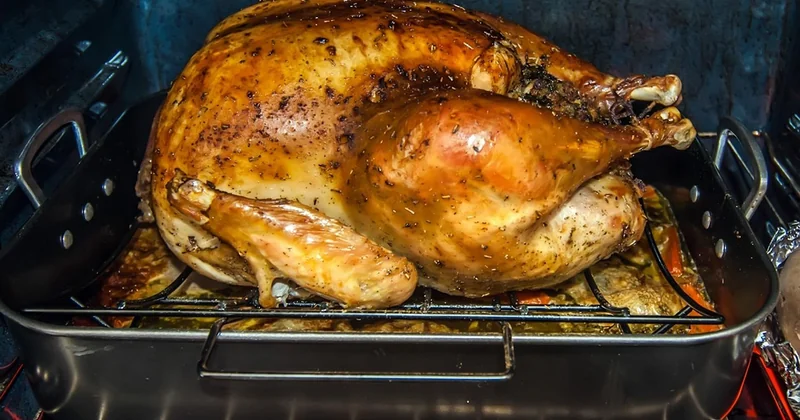
Oven vs. slow cooker: what actually changes
- Evaporation: an oven dries the surface and concentrates the sauce; a slow cooker traps nearly all moisture, so sauces stay thin and watery.
- Heat distribution: ovens surround the food evenly; slow cookers heat from the base and the sides only, which is why you get hot spots.
- Browning: the oven can finish a dish uncovered at 200°C for 15 minutes. A slow cooker cannot brown anything, ever.
- Control: with an oven you can dial the temperature down for a longer, gentler cook. Most slow cookers only have low, high, and warm.
I use the oven for anything where I want a reduced, glossy sauce. I use the slow cooker when I want to leave the house and not think about it. Those are different goals, and pretending otherwise leads to disappointment.
The step-by-step oven method
- Pat the meat dry and salt it. Ideally 24 hours ahead, but 45 minutes on the counter works if you forgot.
- Sear in a heavy pot over high heat until deeply browned on every side. Two to three minutes per face.
- Lower the heat, add aromatics, and pour in liquid until it comes one-third up the meat, not covering it.
- Cover with a lid or foil, and slide it into a 150°C oven.
- Start checking at the two-thirds mark. A probe thermometer is the only reliable way to know.
- Rest the meat in the liquid for 20–30 minutes before slicing. The gelatin firms up and the juice stays inside.
Step three is where I used to go wrong. I filled the pot to the top out of fear. What I got was boiled meat and gray sauce. Less liquid concentrates flavor and still keeps the environment humid under the lid.
Mistakes that ruin a slow cook, and how to fix them
Using too much acid in the marinade
Acid does help soften the surface of the meat. But soak a chuck roast in wine or vinegar for two days and the outer layer turns mushy and pale, like it has been cooked by chemistry instead of heat. I cap acidic marinades at 12 hours and keep the acid to roughly a quarter of the liquid volume.
Opening the lid every twenty minutes
Every time you lift the lid, you dump the accumulated heat and add cooking time back. In an oven this costs you maybe ten minutes. In a slow cooker, where the recovery is slow, it can cost half an hour. Sound familiar? Almost everyone does this the first few times. Set a timer and walk away.
Slicing the second it comes out
This is the one that hurts most, because you have waited four hours. Cut into a hot braise and the juice pours out onto the board, leaving dry slices and a puddle. Wait. Twenty minutes minimum, thirty if you can stand it. The difference is not subtle.
Expecting lean cuts to turn tender
They won't. A sirloin tip or a lean round has almost no collagen to convert, so four hours of braising just overcooks the muscle fibers. Slow cooking is not a magic process that applies to all meat. It is a specific chemical reaction that requires specific raw material: cuts with plenty of connective tissue, worked on with heat, moisture, and patience.
Which is the whole thing, really. The tenderness you are chasing was never something you add. It is something already in the meat, waiting for the right conditions to dissolve into something better. Your only job is to hold those conditions steady and resist the urge to intervene. That part took me years to learn, and I still catch myself peeking under the lid.