You're standing on a sidewalk in Bangkok at 11 p.m. The air smells of charcoal, fish sauce, and frying garlic. A woman in a plastic apron hands you a paper plate of pad thai for about a dollar, and behind her, forty other vendors are doing the exact same thing. Nobody planned this. Nobody regulates the recipes. Yet everyone in the line knows exactly which stall to choose, what to order, and how to eat it.
That's street food culture around the world explained in a single scene — not as a menu of exotic snacks, but as a system of rules, hierarchies, and social codes that outsiders rarely notice on the first visit. The food is the easy part. The culture is the reason it tastes the way it does.
I've eaten on the street in roughly twenty countries, sometimes badly, occasionally brilliantly, and I've learned that the vendors are almost always more interesting than the dishes. So let's talk about what's actually happening on that curb.
Key Takeaways
- Street food is less a category of food than a category of context: cheap, fast, eaten standing up or on the move.
- Its roots run deep — fried fish sold in ancient Greek markets, prepared meals for Romans without kitchens, servants buying hot dishes for wealthy households in China.
- Asia dominates the global reputation, but Mexico, Turkey, India, Nigeria and Thailand all have street traditions that operate on completely different logic.
- The best indicator of quality is rarely the food itself. It's the length and demographic of the queue.
- Gentrification and delivery apps are quietly rewriting the rules faster than any health regulation has managed.
Which country is famous for street food — and why that question is harder than it sounds
The honest answer is Thailand, and it's not a close contest in most travelers' minds. Bangkok alone has enough street stalls to feed a mid-sized European city, and the country has built an entire tourism identity around it. Mexico runs a very close second, with India and Turkey arguing loudly for third place.
But here's the thing: "famous" and "best" are two different measurements, and the gap between them is where the interesting stuff lives.
What makes a country famous for its street food
Three factors push a country into the global conversation, and none of them are about flavor.
- Tourism infrastructure: a country that welcomes visitors will export its food culture whether it means to or not.
- Media exposure: one documentary can do more for a cuisine's reputation than a century of steady cooking.
- Walkability: street food is fundamentally an urban, pedestrian phenomenon. Cities built around cars kill it.
Thailand scores on all three. So does Mexico City. Meanwhile, some of the finest street cooking on earth — I'm thinking of specific corners in Oaxaca, in Istanbul's back streets, in Lagos — stays under the radar simply because nobody built a tourism board around it.
The popularity trap
Fame has a cost. When I first ate at a now-famous stall in Chiang Mai years ago, it was a normal neighborhood operation with four plastic tables and a grandmother running the wok. On a return trip, the same stall had laminated menus in three languages, a queue of forty tourists, and food that had dropped noticeably in quality. The recipe hadn't changed. The pressure had.
This isn't nostalgia talking. It's a structural problem: when a stall triples its volume, something has to give, and it's almost always the slow, inconvenient step that made the dish worth eating.
What is the origin and history of street food?
Street food is older than restaurants. Considerably older, in fact — restaurants as we understand them are a relatively recent invention, while selling cooked food in public spaces goes back to the earliest cities.
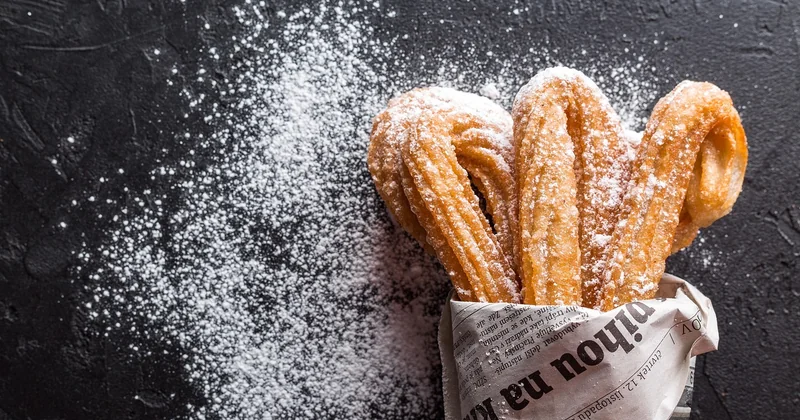
In ancient Greece, vendors sold fried fish in marketplaces. In Rome, most urban residents had no kitchen, no oven, and often no way to store food safely, so they bought hot meals from street counters the way you'd order takeout. In China, servants were sent out to buy prepared dishes for wealthy households — an early version of delivery, minus the app.
Why cities created street food in the first place
The mechanism is almost always the same, and it's practical rather than gastronomic.
- People migrate to cities for work.
- Housing gets cramped. Kitchens disappear or shrink.
- Working hours stretch. Nobody has time to cook.
- Someone with a wok, a cart, and a family recipe fills the gap.
Every street food culture I've encountered follows this logic in some form. The flavor is a byproduct of the economics.
Transmission without recipes
What fascinates me most is how these dishes survive. Most street vendors don't work from written recipes. A grandmother teaches her daughter, who teaches a nephew, and the knowledge travels through hands rather than paper. When I asked a vendor in Penang how much palm sugar went into her broth, she looked at me like I'd asked her how much air she breathes.
This is also why street food is so hard to replicate at home. You're not just missing an ingredient. You're missing twenty years of muscle memory.
What are some examples of different cultures of food around the world?
Forget the global list for a second. What matters is that street food encodes how a place eats, not just what it eats — and those codes differ radically from one region to the next.
Southeast Asia: the all-day model
In Thailand, Vietnam, and Malaysia, street food isn't a snack between meals. It's breakfast, lunch, and dinner. A Vietnamese phở stall opens at 6 a.m. and closes when the broth runs out, often before noon. The culture rewards early rising and specific stalls for specific dishes — nobody buys bánh mì from the same place they buy cơm tấm.
Australian street food, by contrast, is a much younger scene. It borrows heavily from Asian and Mediterranean traditions and lives mostly in markets and festivals rather than on permanent corners. That's not a weakness; it's a different starting point, shaped by a country where car culture and suburban sprawl kept pedestrians off the streets for decades.
Mexico and Latin America: the night shift
Mexican street food runs on a different clock. The best tacos al pastor appear after dark, when the trompo starts spinning and the crowds arrive. Corn, chili, and lime form the backbone, and the social ritual — standing at a counter, adding your own salsa, eating in three bites — matters as much as the cooking.
West Africa and the Middle East: the griddle and the grill
Lagos runs on suya: skewered, spiced beef grilled over open coals, sold at night by Hausa vendors. In Istanbul, the simit cart and the balık ekmek boat define the waterfront. Both traditions share a trait — the food is built around a single strong flavor rather than a complex assembly.
A rough comparison
| Region | Peak hours | Signature format | Social rhythm |
|---|---|---|---|
| Southeast Asia | Morning to midday | Noodle soup, rice plates | Sit-down, quick turnover |
| Mexico | Late evening | Tacos, grilled corn | Standing, crowded counters |
| Turkey | All day, peaks at night | Grilled breads, sandwiches | Grab-and-walk |
| West Africa | Evening | Grilled skewers | Takeaway, communal |
| Australia | Weekend markets | Fusion trucks | Event-based, not routine |
Look at that table and you'll notice something: the differences aren't really about food. They're about when a society stops, where it stands, and who it stands next to.
What are the top food cultures in the world?
Any list like this is an argument waiting to happen, so let me be upfront: I'm ranking by influence on global eating habits, not by personal preference. If you disagree, you're probably right.
My rough top tier runs like this: Thai, Mexican, Japanese, Indian, Italian, Turkish, Chinese, Vietnamese, French, and Lebanese. That's ten, and I'd fight for most of them.
But here's the more useful observation. The cultures that dominate global food conversations aren't necessarily the ones with the best cooking. They're the ones whose food travels well — dishes that can be reproduced by an outsider without thirty years of training. Thai curry paste travels. A perfect Neapolitan pizza dough travels badly, which is why so much of the world's pizza is mediocre.
Street food sits at the opposite end of that spectrum. It's the part of a cuisine that refuses to travel. You can't ship the charcoal smoke, the humidity, the plastic stools, the specific corner where the best vendor works. That's precisely why it's worth going there yourself.
The tensions quietly rewriting street food culture
Two forces are reshaping the street food world right now, and neither is a health inspector.
The first is delivery apps. In cities I've visited recently across Asia and Latin America, vendors increasingly split their attention between walk-up customers and app orders. The economics favor the app — no queue, no seating, predictable volume. But something subtle gets lost. A dish packed in a plastic container and driven across town for twenty minutes is a different food from the one eaten thirty seconds off the wok. I've ordered from stalls I love and been genuinely disappointed, not because they got worse, but because the format broke the dish.
The second force is formalization. Cities from Bangkok to Mexico City have been pushing vendors into designated zones, requiring licenses, and clearing sidewalks. Some of this is justified — traffic chaos and food safety are real concerns. Some of it is just the aesthetics of the middle class asserting itself. Either way, the effect is the same: the cheapest, most improvisational layer of a city's food culture gets squeezed out first.
Vendors adapt. They always have. But when I walk through neighborhoods I knew a decade ago and can't find the stall that used to anchor the corner, I feel the loss in a way that's hard to argue in a policy meeting.
How to actually read a street food culture
If you're traveling and want to eat well, stop looking for "the best street food in [city]." That question is unanswerable and usually leads to tourist traps.
Instead, watch the crowd. Count how many people are waiting, how many are locals, and how many dishes the vendor is actually making. A stall doing one thing well beats a stall doing fifteen things badly, every single time. And if the vendor looks mildly annoyed that you're asking questions instead of ordering — that's a good sign. It means the food, not the customer experience, is the priority.
The street food cultures that survive longest are the ones that never tried to be charming in the first place. They just kept cooking, on the same corner, for the same people, for decades.