Ask ten people where fish and chips comes from and you'll get ten confident answers. Most of them wrong. The same goes for pizza, paella, and just about every dish we lazily file under "national cuisine."
I learned this the hard way. A few years back I spent a month in Naples convinced I understood pizza's origin story, then opened a book by a food historian who politely dismantled everything I'd repeated for a decade. What stuck with me wasn't the correction itself. It was the realisation that national dishes are almost never as old, as pure, or as homegrown as the story suggests.
The story behind famous national dishes usually runs through trade routes, poverty, immigration, and a good deal of marketing. That's the part the postcards leave out.
Key Takeaways
- A national dish is rarely "traditional" in the way people assume. Most were codified in the 19th or 20th century.
- Ingredients tell the real story. Tomatoes, potatoes, and chillies are all New World crops, so anything built on them postdates 1492.
- Several iconic dishes were born from scarcity, not celebration. Fish and chips, pasta e fagioli, and many others started as food for the poor.
- Governments and tourism boards have actively promoted certain dishes as national symbols.
- Paternity disputes are everywhere: kimchi, paella, carbonade, hummus. Ownership claims usually say more about politics than cooking.
Why national dishes are younger than you think
The uncomfortable truth is that the idea of a national dish is itself a modern invention. It arrived alongside railways, mass literacy, and the cookbook. Before that, people ate what grew within walking distance, and nobody thought in terms of "national" anything.
Consider Italy. The country only unified in 1861. Before that, "Italian cuisine" was a fiction nobody needed. What existed was a patchwork of regional kitchens that barely recognised each other. Even today, ask someone from Bologna about carbonara and watch their face.
The recipe book problem
Here's what nobody tells you: the "authentic" version of a dish you're defending online probably dates from a cookbook published within living memory. Recipes weren't standardised for most of history because most people couldn't read. They cooked by feel, by season, by what was cheap that week.
Once printing got cheap, someone had to decide on a canonical version, and that decision was usually arbitrary. A single author, a single publisher, a single decade.
My own kitchen taught me this. I once tried to recreate my grandmother's braised dish from memory and ended up with something completely different from what she made, using the same ingredients. There was no "correct" version. There never had been.
Who gets to decide what counts as national?
Usually not the people who cook it every day. The push comes from above: tourism ministries, diaspora communities abroad trying to preserve something they've already lost, or a chef looking for a signature.
Spain's relationship with paella is instructive. The dish is Valencian, born in the fields around the Albufera lagoon where workers cooked rice over an open fire with whatever was available. Rabbit, snails, beans. Not chorizo, not seafood, not the tourist version served in a pan the size of a bicycle wheel along the coast. Valencians have been complaining about this for decades, and honestly, they have a point.
The ingredients that betray the real story
You can date a dish by what's in it, and the results are humbling.
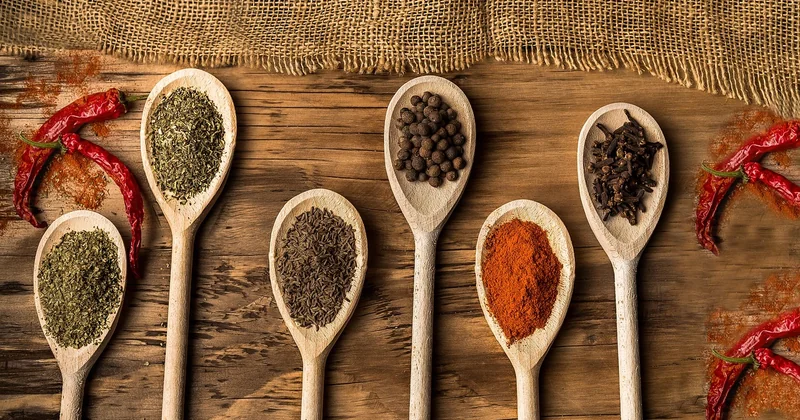
Nothing in European cooking before 1492 contained tomato. No Italian red sauce. No Spanish tomato bread. No Hungarian goulash as you know it, because paprika is a New World pepper that only reached Hungary in the 16th century and didn't become common until much later. Potatoes arrived the same way, which means the Irish relationship with the potato is barely five centuries old, and the famous colcannon is younger than Shakespeare.
Chillies followed the same route into India, Thailand, Korea, and Sichuan. Every "ancient" spicy cuisine outside the Americas is built on an ingredient that didn't exist there before Columbus sailed.
That single fact demolishes most of the origin myths people defend most fiercely.
What do we actually mean by "national dish"?
The term gets used loosely. To be fair, it usually means one of a few things:
- A staple eaten daily across most of the country
- A festive dish tied to a specific holiday or religious calendar
- A symbol chosen for export, sometimes by a tourist board rather than by cooks
- Whatever a country's diaspora cooks when it gets homesick
Those four categories often point to four different dishes. Nobody agrees on which one deserves the title, which is why the arguments never end.
Three dishes and the stories behind them
Abstract principles are fine, but concrete cases are better. These three show how differently a dish can become national.
Fish and chips: an immigrant story dressed as British tradition
Fish and chips feels older than the Union Jack. It isn't. Fried fish arrived in London with Jewish immigrants from Portugal and Central Europe in the 19th century, and separately, fried potatoes became popular in the industrial north. The two only combined into a single meal toward the end of that century, in a country that was rapidly urbanising and needed cheap calories for factory workers.
It was never a celebration food. It was fuel. Fried fish and potatoes were among the few things a poor family could buy that filled stomachs for pennies, and the dish spread because of railways and refrigeration, not because anyone was guarding a recipe.
Which is why the current arguments about "real" fish and chips, batter recipes, and whether mushy peas belong on the plate, are a bit funny. There is no ancient tradition to protect. There's a working-class meal from about 150 years ago that got lucky.
Kimchi: when food becomes a diplomatic weapon
Kimchi has been made on the Korean peninsula for centuries, but the version most people picture, the bright red cabbage, only became standard after chillies arrived from the Americas and after a particular fermentation technique spread during the 18th and 19th centuries. The white radish kimchi that came before it looks nothing like what you'll find in a supermarket today.
What makes kimchi interesting isn't the recipe. It's the politics. Korea has pushed hard to protect and promote kimchi internationally, including a campaign to standardise the Chinese transliteration of the name so it wouldn't be confused with Chinese pickled vegetables. Who owns kimchi is now a question for governments, not just grandmothers.
I've made kimchi at home three times. Two batches were fine. One was a disaster I won't describe in detail, and it taught me more about the fermentation process than any recipe ever did.
Carbonade flamande: a dish split by a border
Carbonade flamande, a slow-braised beef cooked with beer, onions, and a hint of something sweet, is claimed by Belgium and by northern France. Both are right. The dish predates the border that runs between them, which is exactly the problem. It's a regional dish from a region that got divided by 19th-century diplomacy.
Belgian versions use local brown beer and often a slice of bread spread with mustard. French versions in the north lean on their own brewery traditions. Both insist theirs is the real one. Both are cooking the same thing their shared ancestors cooked long before anyone thought of it as "Belgian" or "French."
How a dish actually becomes "official"
Nobody holds a vote. Consécration happens through a mix of these mechanisms, and they rarely involve cooks.
| Mechanism | How it works | Example type |
|---|---|---|
| Tourism campaigns | A national board picks a dish that photographs well and pushes it abroad | Paella on Spanish coastlines |
| Diaspora adoption | Communities abroad cook one dish to represent home, and it sticks | Pho in Vietnamese restaurants worldwide |
| Industrial production | A dish gets packaged and exported, fixing one version in the public mind | Instant ramen, tinned fish |
| State recognition | Governments formally protect or promote a recipe | Kimchi standardisation efforts |
| Festival tradition | A holiday dish becomes the country's shorthand for itself | Thanksgiving turkey, Christmas stollen |
The pattern repeats. Someone with money or power decides a dish represents a nation. Cooks adapt. Tourists photograph. Within a generation, everyone believes it was always this way.
So what does "authentic" even mean?
Less than you'd think. Authenticity is a moving target. Every dish you love is a snapshot of a moment, frozen by whoever wrote it down first.
The most honest answer is that a dish becomes national when enough people agree it is, regardless of where it came from. That agreement is usually recent, usually political, and almost never about flavour.
If you want a real test, cook a dish the way your family makes it, then ask someone from the "original" country whether yours is correct. You'll get a shrug, an argument, or a story about a grandmother. Possibly all three at once.
The part that actually matters
Here's what I keep coming back to. The origin story is usually less interesting than why the dish stuck.
Pizza became Italian because Naples was crowded, poor, and needed something fast and cheap, and a flatbread with tomato did the job. Goulash became Hungarian because cattle herders needed food that survived a long day on the plains. These meals didn't rise to national status because they were the best food in the country. They rose because they fit a moment, and then people built a story around them afterwards.
That's not a disappointment. It's the point. The dishes that last are the ones that answered a real problem, and the story came later, invented by people who needed the past to be tidier than it was.
Next time someone tells you a dish is a thousand years old, ask what was in it before the tomato arrived. The answer is usually silence, then a very good argument.