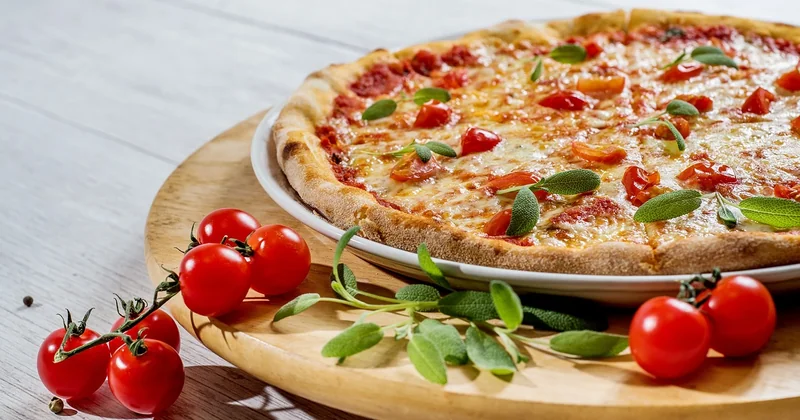
Naples, 1889. A cook named Raffaele Esposito is summoned to the palace of Capodimonte to feed a queen. Italy has just been unified, and the monarchy needs symbols. Esposito takes dough, tomato, mozzarella, basil — green, white, red, the new national flag on a plate — and the Margherita is born. That's the story everyone repeats. It's useful, tidy, and mostly theatre. Pizza existed long before that day, and the version you ate last month probably tastes nothing like what Esposito made.
I've been digging into the history of pizza for years, mostly because I kept getting into arguments about whether it's Italian or Greek, ancient or American, and I wanted to settle it for myself. The honest answer is that the global pizza is a product of the twentieth century, not the nineteenth. The dish itself is old. The word "global" is not.
Key Takeaways
- Flatbread with toppings existed across the Mediterranean centuries before "pizza" had a name — Greece, Egypt, Rome, and the Persian armies all ate something recognisable.
- The modern pizza took shape in Naples between the eighteenth and nineteenth centuries, as cheap food for workers who needed to eat standing up.
- Tomatoes only reached Italy from the Americas in the sixteenth century, and were treated with suspicion for another two hundred years.
- Neapolitan immigrants carried the recipe to American cities in the late 1800s. The pizza most of the world eats today descends from that American branch, not the original.
- What actually globalised pizza was industrial: tinned tomato, frozen dough, gas ovens, franchising, and television.
- UNESCO added the art of the Neapolitan pizzaiolo to its intangible heritage list in 2017 — a late recognition for a craft that had already left home.
Where pizza actually came from
If you want to annoy a Neapolitan, tell them pizza was invented in Greece. It's rude, but not ridiculous. The Greeks baked plakous, a flatbread dressed with oil, garlic, and herbs. Persian soldiers under Darius the Great reportedly cooked dough on their shields and piled cheese and dates on top. The Romans had libum and later a street food called picea, sold in the markets of Pompeii.
None of those are pizza. But all of them share the same idea: cheap dough, a hot flat surface, whatever toppings you have. Pizza is not a recipe. It's a technique that keeps being reinvented by hungry people with ovens.
Is pizza Italian or Greek?
Italian, and the confusion comes from a translation problem. When ancient Greek texts describing flatbreads were rendered into Latin, the word used was pitta or pizza — a generic term for a flat, round baked thing. That doesn't mean the Greeks invented the modern dish. It means both languages had a word for flatbread. The dish as you know it, with tomato and mozzarella, is Italian and specifically Neapolitan. Calling it Greek because of a shared word is like calling bread Turkish because pita sounds similar.
The tomato problem
Here's the part most articles skip. Tomatoes are American. They arrived in Europe from Mexico and Peru in the sixteenth century, and for roughly two hundred years Italians treated them as decorative. Farmers grew them because they looked nice. Nobody ate them.
The shift happened gradually in southern Italy, where the soil was poor and the poor had to eat whatever grew. By the late 1700s, tomato on flatbread was a cheap meal in the alleys of Naples. Which brings us to an uncomfortable point: the most iconic element of Italian cuisine is a foreign ingredient, adopted by poor people, and only made respectable once the rich noticed.
Naples: the city that built pizza
By the mid-1800s, Naples had hundreds of small pizza stalls. Visitors complained about the noise, the crowds, and the smell of frying oil. Foreign travel writers described pizza-eating as something to witness rather than enjoy. The dish was food for porters, sailors, and the working poor who had no kitchens at home and needed something cheap to eat while standing.
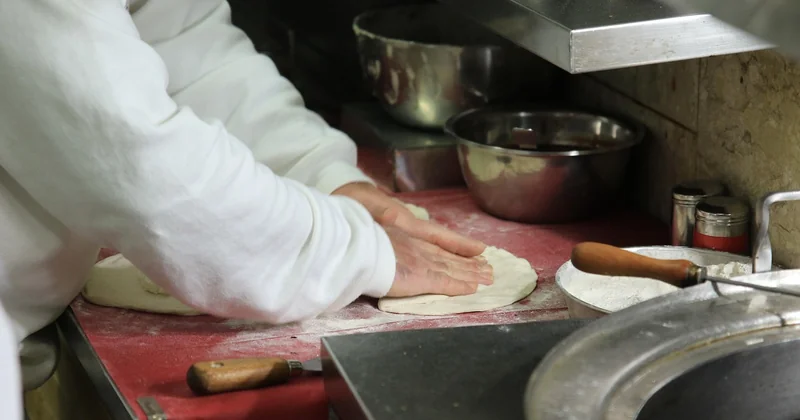
What changed everything was the gas oven. Wood-fired domes are romantic, but they're hard to control and require constant attention. Once bakers could rely on steady, regulated heat, pizza became reproducible. Not better, necessarily. Reproducible. And reproducibility is what makes a food travel.
What did the first pizza look like?
Roughly like a flat disc of bread, about the width of a large plate, with an uneven rim and a soft, wet middle. Not the crisp, perfectly charred circle you see on restaurant menus today. It was eaten folded in half, from paper, often with oil dripping down the wrist. The cheese was sometimes mozzarella, sometimes caciocavallo, sometimes nothing at all. Garlic, oregano, and oil were more common than the tomato-and-cheese combination that later became the standard.
How pizza crossed the Atlantic
Between 1880 and 1920, millions of southern Italians left for the United States. They took dialects, religious feasts, and food habits. In New York, Chicago, and Philadelphia, small bakeries started selling pizza to immigrant customers who already knew it. Outside those neighbourhoods, nobody wanted it. Americans found the dish strange — a foreign, garlicky thing sold in poor parts of town.
Was pizza invented in America?
No, but the American version was. Two things happened that had no precedent in Naples. First, the tomato sauce got cooked down and sweetened, because American tinned tomatoes were blander. Second, cheese went on top in industrial quantities, because American mozzarella was cheap and plentiful. By the 1940s, city pizza places were drawing curious outsiders, and returning soldiers who had eaten pizza in Italy during the war started asking for it at home. That's the actual turning point, not a royal commission.
I made a mistake when I first started reading about this: I assumed the Margherita story explained everything. It doesn't explain the twentieth century at all. The Margherita is a national legend. The global spread of pizza is a business story, and the business story is much less flattering.
The industrial multiplication
What turns a regional food into a worldwide one is not admiration. It's margin. Pizza was cheap to make, easy to standardise, and had a short enough menu that it could be franchised by people with no cooking skills. The first wave of American chains in the mid-twentieth century figured out that pizza didn't need a chef. It needed a system: portioned dough, measured sauce, timed bake, delivery radius.
Frozen pizza did the rest. Once the product could be shipped in a box, it entered supermarkets, school cafeterias, and the freezers of homes that had never seen a pizzaiolo. Roughly a third of the pizzas eaten in the world today are never made by a person following a recipe.
A short timeline of the spread
| Period | What happened | Where it landed |
|---|---|---|
| Antiquity | Flatbreads with oil, cheese, herbs | Greece, Egypt, Persia, Rome |
| 16th century | Tomatoes arrive from the Americas | Europe |
| 18th–19th century | Pizza becomes street food for workers | Naples |
| 1880–1920 | Immigrant neighbourhoods open pizza shops | New York, Chicago, Philadelphia, Buenos Aires, São Paulo |
| 1940s–1950s | Soldiers home from Italy create demand; first chains appear | United States, Canada |
| 1960s–1980s | Franchising, delivery, frozen product | Western Europe, Japan, Australia |
| 2000s onward | Neapolitan revival, VPN certification, wood ovens in unlikely cities | Everywhere with an oven |
What happened when pizza arrived elsewhere
The dish mutated fast. In Japan, where it landed seriously in the post-war decades, the crust got softer and the toppings shifted toward seafood, corn, and mayonnaise. In Brazil, where Italian immigrants had already settled in São Paulo, pizza became a Sunday institution with thin crust and an almost impossible range of toppings — including, memorably, sweet versions with chocolate. In India, paneer and chicken tikka replaced mozzarella. In Sweden, banana. None of these are errors. They're local logic applied to a foreign format.
And that's the thing about authenticity. Naples has one answer. The rest of the world has thousands, and most of them work.
Why Naples keeps losing the argument
There are rules. The Neapolitan association that certifies traditional pizza specifies flour type, fermentation time, tomato variety, and oven temperature. It exists for good reasons — to protect a craft from being flattened by industrial shortcuts. But a rule that can only be satisfied in one city is not a strategy for a global dish. It's a preservation order.
The internet made this worse, in a way. Every variation now gets compared against the original, and someone always declares the comparison a scandal. Pineapple on pizza has been argued about for longer than some countries have existed. Meanwhile, in Naples, plenty of people will tell you the real marker of quality is the dough and the oven, not the topping.
Why pizza won
Look at the structural properties. The base is neutral and cheap. The toppings are modular, which means every culture can adapt it without learning a new technique. It's eaten with the hands, so no cutlery or table is required. It survives delivery, freezing, and reheating. It can be upscale or it can cost almost nothing, and both versions can coexist on the same street.
Not many foods do all of that. Bread does most of it, and bread never became a franchise category. Sushi travels, but it needs trained hands. Burgers travel, but the meat supply chain is heavier. Pizza sits in a sweet spot that almost nothing else occupies, which is why a Neapolitan street food with a foreign fruit on it ended up on every continent.
A note on the UNESCO thing
In 2017, the art of the Neapolitan pizzaiolo was added to UNESCO's list of intangible cultural heritage. It's often reported as pizza being protected by the United Nations, which isn't quite right. What's recognised is the practice: the twirling of the dough, the oral transmission of technique from master to apprentice, the connection to a specific place. A craft, not a product.
There's something quietly funny about it. The dish had already conquered the world through frozen boxes and delivery apps by the time an international body agreed it was worth remembering. Recognition arrived after the fact, which is usually how it works. Nobody nominates a tradition while it's still just how poor people eat.
Which leaves an odd question. If the pizza eaten by most of the planet is a twentieth-century industrial descendant, and the protected original survives in a handful of Neapolitan kitchens, what exactly are you praising when you say you love pizza? Probably not the Margherita. Probably the version you grew up with, in whatever city that was, made by whoever was closest. The dish is global because it stopped belonging to anyone in particular — and that, more than any royal commission, is what made it travel.