How fermentation shaped human cuisine
Open a jar of kimchi and you catch a whiff of something older than agriculture. Same with a slice of sourdough, a wedge of aged cheddar, a glass of wine that tastes of the soil it came from. Every one of those foods is the result of a microbial negotiation that humans stumbled into long before anyone understood what a microbe was. And once we figured out how to steer it, fermentation didn't just preserve our food. It rearranged our entire relationship with what we eat.
The fermentation that shapes human cuisine isn't one thing. It's lactic acid bacteria turning cabbage sour in a Seoul cellar, yeasts exhaling carbon dioxide into bread dough in a Paris bakery, molds breaking down soybeans into a paste in rural Japan. Different microbes, different climates, different kitchens. Same underlying trick, repeated for thousands of years.
Key Takeaways
- Fermentation predates agriculture and civilization itself — it was discovered, not invented.
- The primary driver was preservation, not flavor, though flavor is what kept it alive culturally.
- Humans can't ferment food directly — we outsourced that work to bacteria, yeasts and molds millennia ago.
- Different regions developed distinct fermentation traditions based on climate, available microbes and staple crops.
- The "live culture" revival of the past decade is a rediscovery, not a new idea.
- Fermented foods remain one of the cheapest, most durable ways to add flavor and shelf life to a diet.
Why do humans ferment food?
The short answer: because we had to eat through winter, and fresh food didn't cooperate.
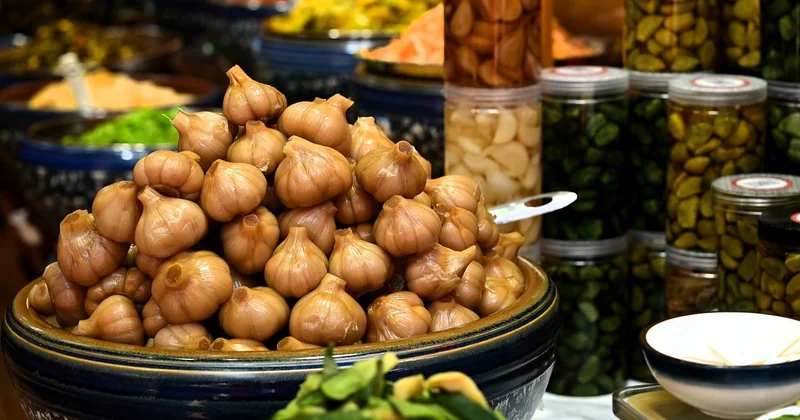
Before refrigeration, before canning, before anyone knew that bacteria existed, a cabbage left on a shelf turned brown and slimy within days. But a cabbage packed in salt and left in a crock turned into something else entirely. Sour, yes. Also stable for months. That's the deal fermentation offers — it trades freshness for durability, and along the way it often improves flavor and nutrition.
The preservation problem
Consider milk. Without cold storage, raw milk spoils in hours in warm weather. But if you let it sit just long enough, lactic acid bacteria take over before the harmful stuff does, and you get something closer to yogurt or cheese. Something that keeps for weeks, travels well, and feeds a family. That's not a coincidence. It's selection pressure operating on human behavior: the communities that figured this out ate better and lasted longer.
Grains tell the same story. A surplus of barley or rice will rot or get eaten by pests. Let it ferment into beer, sake or a sour porridge, and you get a stable, calorie-dense product that also happens to be pleasant to drink. Several ancient civilizations appear to have done exactly this, and some researchers argue that beer production may even predate bread baking in certain regions.
What fermentation actually does to food
Mechanically, fermentation works through three levers: acid, alcohol, and salt (or a combination). Lactic acid bacteria drop the pH of a vegetable below the threshold where spoilage organisms can survive. Yeasts produce ethanol that inhibits other microbes. Salt pulls water out of cells and creates an environment only halotolerant species can tolerate.
The practical result is that you can take a bland, perishable ingredient and turn it into something that lasts, tastes sharper, and is often easier to digest. That last point matters more than people realize — fermentation predigests food. It breaks down compounds that human enzymes struggle with.
Are humans capable of fermentation?
Not on our own. Humans cannot ferment food directly — we don't have the metabolic pathways to produce lactic acid or ethanol in a way that transforms food. What we can do is host fermentation. Our bodies ferment certain fibers in the colon with the help of gut bacteria, but that's a side effect of digestion, not a culinary act.
What humans are extraordinarily good at is creating conditions where other organisms do the work. Salt, temperature, anaerobiosis, time. We build the stage. The microbes perform.
How did humans figure out fermentation?
Nobody sat down one afternoon and decided to invent beer. Fermentation was almost certainly discovered by accident — repeatedly, in different places, by people who noticed that a forgotten jar of something had turned into something else, and that the something else was still edible. Or in the case of alcohol, pleasurable.
The earliest traces
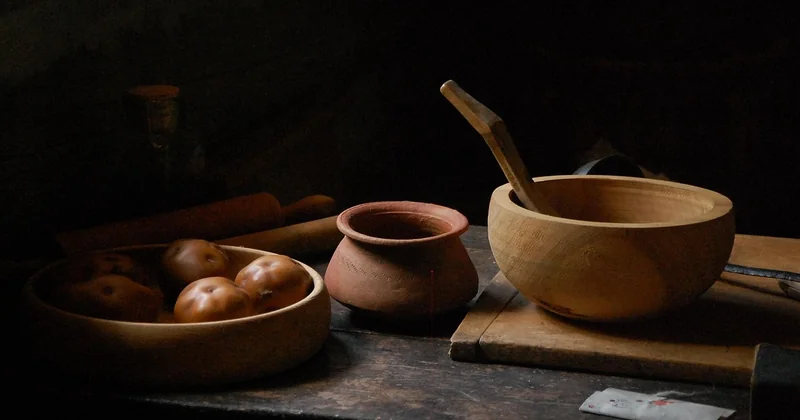
The oldest confirmed evidence of intentional fermentation comes from China, where residue analysis on pottery suggests fermented beverages were being made from rice, honey and fruit sometime around 7000 BCE. In the Caucasus region, wine production appears to have taken hold by roughly 6000 BCE. Leavened bread shows up in Egypt a few thousand years later. These dates keep getting pushed back as new sites are analyzed, which tells you something: fermentation is probably as old as settled human communities, maybe older.
The pattern is consistent. Someone stores a food. It changes. They eat it anyway. It's better than expected. They try to reproduce the accident. Eventually the technique gets transmitted, refined, and embedded in ritual.
From accident to method
The transition from lucky accident to reliable method is the real turning point. Once a community learned that a specific vessel, a specific salt ratio, a specific temperature, and a specific amount of time produced a predictable result, fermentation became technology. Not the modern kind, but technology nonetheless.
Different regions arrived at different answers because the microbes available to them were different. Cool climates favored yeasts and molds. Warm, humid climates favored lactic acid bacteria and mixed cultures. Coastal areas used salt and fish. Inland areas used salt and vegetables. The map of world cuisine is, to a surprising degree, a map of local microbial ecosystems.
What country has the most fermented food?
There's no clean way to rank this, and anyone who claims otherwise is guessing. That said, a strong case can be made for Korea, where fermented foods aren't a category — they're the foundation of the cuisine. Kimchi, doenjang (fermented soybean paste), gochujang (fermented chili paste), jeotgal (salted seafood), and a long list of lesser-known preparations appear across almost every meal.
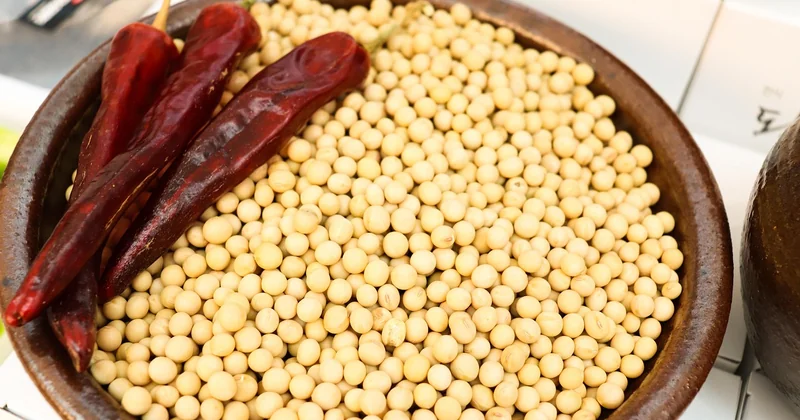
Japan runs close, with miso, soy sauce, natto, sake, mirin, and a wide range of pickled vegetables (tsukemono). China has an enormous and underappreciated tradition — fermented tofu, doubanjiang, suan cai, rice wines. And several European countries could stake a claim on a per-capita basis: Germany with its sauerkraut and sour beers, Italy with its cured meats and aged cheeses, Georgia with its wine culture.
Honestly, the question itself reflects a modern bias. For most of human history, nearly every culture fermented something, because fermentation was how you survived the lean months. The countries that look like outliers today are simply the ones where the tradition stayed visible.
How fermentation divided the world's cuisines
Here's the part that gets overlooked. Fermentation didn't just preserve food — it created regional identity. The same cabbage becomes sauerkraut in Germany, kimchi in Korea, cortido in El Salvador, and curtido-style pickles across the Balkans. Each version tastes nothing like the others, because each one uses local ingredients, local microbes, and local expectations.
| Region | Staple fermented food | Primary microbe type | What it preserved |
|---|---|---|---|
| East Asia | Soy sauce, miso, kimchi | Molds and lactic acid bacteria | Soybeans, vegetables, fish |
| Europe | Cheese, wine, sauerkraut | Yeasts, molds, lactic acid bacteria | Milk, grapes, cabbage |
| Middle East / North Africa | Yogurt, labneh, pickled lemons | Lactic acid bacteria | Milk, citrus |
| West Africa | Fermented cassava, locust bean | Lactic acid bacteria, Bacillus | Root vegetables, seeds |
| Americas | Pulque, cacao, sour corn dough | Yeasts, lactic acid bacteria | Agave, cacao, maize |
Notice that the raw ingredients differ wildly, but the outcomes rhyme. Every tradition found a way to make its local staple last longer and taste more complex. The techniques varied because the starting materials varied. The goal was universal.
This is the part that gives me pause when I think about it. We talk about cuisine as if it were invented by chefs. In reality, most of the deepest, most distinctive flavors in the world were invented by microbes, working on ingredients that farmers couldn't sell fresh.
The modern revival isn't new
Walk into any grocery store in 2026 and you'll see kombucha in the refrigerated section, "live culture" labels on sauerkraut, sourdough starters sold in kits, and a shelf of fermented hot sauces with names like "small batch" and "wild ferment." It looks like a trend. It isn't.
What's actually happening is that a food-preservation technology that was nearly displaced by industrial refrigeration and canning is finding its audience again. People are fermenting at home because it's cheap, because it tastes better than the mass-produced versions, and because — for reasons that are still being studied — fermented foods seem to do good things for gut health.
I've kept a sourdough starter going for the better part of two years now. It's not a hobby I'd recommend to anyone who likes predictability. The thing has moods. Some weeks it doubles in four hours. Other weeks it sulks. But the bread it produces is unlike anything I can buy, and every loaf is a small reminder that I'm participating in a process that predates written language.
Food writer Harold McGee once pointed out that fermentation is one of the few culinary techniques where the cook's main job is to get out of the way. That feels right. You set the conditions, you wait, and the microbes do the rest.
What this means for how we eat today
The reason fermentation matters isn't nostalgia. It's that the technique solves problems we're still wrestling with — food waste, shelf life, flavor without additives, nutrition from cheap ingredients. A jar of fermented vegetables costs almost nothing to make and lasts for months. That's not a lifestyle trend. That's engineering.
Next time you eat something sour, funky or fizzy, you're tasting a collaboration. Not just between you and a farmer, or you and a cook, but between you and a lineage of microbes that have been doing this work for longer than humans have existed. The recipe is ours. The labor is theirs.
And the fact that we still don't fully understand why some ferments taste better than others — why one batch of kimchi sings and the next one just sits there — says something about how much of this craft remains, in the best sense, unmastered.