My grandmother's recipe card for pastéis de nata has a grease stain right where the oven temperature should be. I called her once to ask what number to set, and she said, "You'll know when it smells right." I burned three batches before I understood what she meant. That card is the most valuable thing I own, and it contains almost no usable information. Which is exactly the point.
Food traditions matter in every culture because they carry something no cookbook can hold: the accumulated knowledge of people who learned by standing next to someone else, tasting, adjusting, and passing it on. When that chain breaks, you don't just lose a recipe. You lose a way of understanding where you come from.
Key Takeaways
- Food traditions encode history, identity, and practical knowledge that gets passed down through doing, not writing.
- Sharing a meal triggers real biological responses that build trust between people—it's not just a nice idea.
- Migration both threatens and transforms food traditions. Displacement can erase a cuisine or force it to adapt and survive.
- Most culinary knowledge is stored in bodies and memories, not documents. Once a generation stops cooking, the archive closes.
- You don't need a cultural heritage project to keep a tradition alive. Cooking the dish once a month does more than any museum exhibit.
Why food traditions matter in every culture: the archive that lives in your hands
Here's the thing about food culture that most articles skip over: it's not just about what you eat. It's about what gets stored in the cooking.
A recipe is a delivery mechanism for a lot of information that has nothing to do with ingredients. How a dish gets seasoned tells you what grew nearby. What time of day it's served tells you how labor was organized. Who sits at the table first tells you how power worked in that household. You can read an entire social structure off a Sunday dinner if you know where to look.
I learned this the hard way when I tried to recreate my grandmother's caldo verde from a cookbook. The ingredients were right. The technique was right. It tasted like nothing. I was missing the specific memory of her kitchen—the way she'd taste it three times before serving, the cheap olive oil she refused to replace. The recipe was data. The tradition was context.
What is food culture, exactly?
Food culture is the sum of everything a group of people does around eating: the ingredients they choose, the techniques they develop, the rules about who eats with whom and when, the stories told over the meal, the taboos, the celebrations. It includes farming practices, market rituals, festival dishes, and the unspoken rule that you never cut the bread a certain way because your grandfather said so.
It's both tangible (the tools, the spices) and invisible (the etiquette, the timing, the meaning). And it's almost entirely dependent on people bothering to keep it going.
Why are traditional foods important to a culture?
Traditional foods are important to a culture because they connect the present moment to specific historical experiences. They're the only form of heritage that you can taste. A building reminds you of the past by standing there. A dish does something more active: it invites you to participate in that past by recreating it with your own hands.
When I was researching food traditions in diaspora communities, I kept hearing the same phrase in different languages: "This is how we know we're still here." That's the function. Food is a way of asserting continuity in the middle of change.
Why food culture matters more than you think
The biological layer is real, and it's usually ignored in discussions about food and culture. When you eat with someone, your body releases oxytocin. That's the same hormone involved in bonding between parents and children. Eating together isn't a social nicety—it's a physiological trust-building mechanism that humans evolved long before they had written language.
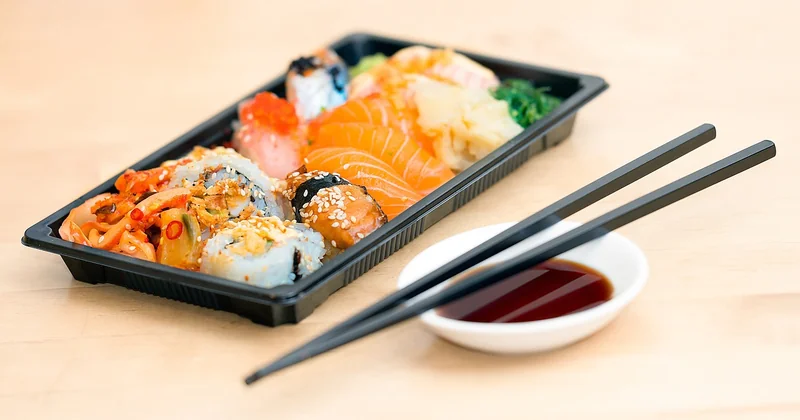
This is why every culture has some version of the shared meal as the core social ritual. The Sunday roast. The Friday couscous. The Friday night shabbat dinner. The potlatch. The Korean hoesik where coworkers eat and drink together after hours. Different foods, different rules, same underlying machinery.
Why does food culture matter?
Food culture matters because it does three jobs at once that nothing else can replicate. It creates social cohesion (you eat with your group), it transmits identity (you learn who you are by learning what you eat), and it preserves memory (your grandmother's dish outlives your grandmother).
Try doing all three with a flag and a national anthem. It doesn't work. Flags don't taste like anything.
Why is food so significant to different cultures?
Every culture landed on food as a central identity marker because food is the one thing that every human being has to deal with multiple times a day. It's universal and specific at the same time. Rice is universal. Onigiri is Japanese. The ritual of eating is universal. The rule about not sticking chopsticks upright in rice is Japanese. The universal provides the stage. The specific provides the meaning.
Food is also portable. When people move, they can carry their cuisine with them in a way that they can't carry a temple or a cemetery. That's why you find Vietnamese pho in Paris, Ethiopian injera in Washington DC, Turkish döner in Berlin. The food travels because the people travel, and the food becomes the anchor that holds the culture in place.
Food traditions under real threat—and why it matters
Most of what you'll read online treats food traditions as a comfortable topic. Charming, colorful, safe. But food traditions are being erased right now in conflict zones, in displacement crises, and in the slow grind of assimilation.
I spent a year talking to families who had been displaced from northern Syria, and the thing they kept mentioning wasn't their houses. It was their kitchens. Specifically: the fact that their parents couldn't teach their grandchildren how to make certain dishes because the ingredients didn't exist where they'd fled to. Recipes were lost because the conditions for making them were gone.
That's the real fragility. Food traditions don't die because people stop caring. They die because the chain of transmission breaks—when a grandmother can't cook with her granddaughter, when the right pepper isn't available, when the feast day gets swallowed by survival needs.
What gets lost when a food tradition disappears?
A food tradition is a compressed archive. When it disappears, you lose the agricultural knowledge (what grew where), the trade history (what got imported), the gender history (who cooked what), the religious history (what got blessed or forbidden), and the economic history (what was cheap, what was luxurious).
You also lose a specific way of being together. When I watched a family make dumplings after they'd resettled, the dish was the same. But the context was gone—the neighbors who used to show up uninvited, the courtyard, the specific afternoon light. The recipe survived. The tradition thinned out.
How does displacement affect cultural food traditions?
Displacement usually forces one of two outcomes. Either the tradition dies within two generations, or it transforms into something more rigid and more defended. When a cuisine is under pressure, it often becomes more codified—less flexible, more insistent on the "correct" way. Exile makes people traditionalists about food in ways they never were at home.
I saw this with a Palestinian family who insisted on making musakhan with sumac from a specific region. When they couldn't get it, they stopped making the dish. Their children learned the dish as a story rather than a practice. That's a border crossing that a lot of food writing ignores.
How traditions actually get transmitted (and how they don't)
You can't learn a food tradition from a recipe. I know because I tried, and it failed. Recipes are instructions for a single dish. Traditions are instructions for how to live with that dish—when to make it, for whom, with what substitutions permitted, and what it means when you serve it.
The transmission happens in the kitchen, over years, through repetition. It happens when a child watches a parent and gets bored and leaves and comes back. It happens when an adult tries to recreate the dish and gets it slightly wrong and calls their aunt to ask what they missed. The errors are part of the learning.
| Transmission method | What it preserves well | What it loses |
|---|---|---|
| Oral and hands-on (kitchen apprenticeship) | Technique, timing, adaptability, the "smell test" | Precision, scalability, portability out of context |
| Written recipe | Ingredient list, basic proportions, longevity across generations | Variation, seasonality, judgment calls, the social setting |
| Restaurant replication | Consistency, availability, exposure to outsiders | Family-specific versions, religious variations, home meaning |
| Video and social content | Visual technique, broad reach, accessibility | Smell, texture, emotional context, patience |
Is food part of culture, or just a symptom of it?
Both. Food is a product of culture (it reflects what a society values and has access to) and a producer of culture (it shapes how people relate, what they celebrate, how they mark time). This two-way relationship is why you can't separate food from culture without losing the thing you're trying to study.
When people say "food is culture," they usually mean it as a nice sentiment. It's more literal than that. Food is one of the primary ways culture exists in material form.
What role does food culture play in your life—and why should you care?
If you're reading this from a place where your food traditions are intact, the honest answer is: you might not notice them. That's how traditions work. They're invisible until they're under pressure.
But here's what I've found after years of this work: the people who end up most disconnected from food traditions aren't the ones who moved away. They're the ones who never engaged in the first place. The chain breaks at home, not at the airport.
I'm not going to tell you to go learn your grandmother's recipes before she dies. You've heard that. What I will say is that the transmission isn't automatic. It requires someone in each generation to choose to participate. If that person doesn't show up, the tradition doesn't wait around.
How to start participating in your own food tradition
You don't need a heritage project or a family reunion. You need a Tuesday.
- Pick one dish that matters to your family or cultural background. Just one.
- Make it this week, badly if necessary. Burn it. Undercook it. Eat it anyway.
- Write down what you did—not as a recipe, as a log. Include the mistakes, the substitutions, what you'd change.
- Call the person who knows how to make it and ask one specific question. Not "how do I make it" but "why do you do X at step Y."
- Make it again next month. Invite someone to eat it with you. This step is not optional. A tradition that isn't shared isn't a tradition.
The point isn't mastery. The point is keeping the channel open.
The thing that actually gets lost
I have a theory about why food traditions provoke more emotion than other kinds of heritage. A building can be restored. A language can be revived with enough effort. A dance can be reconstructed from film. But a food tradition that hasn't been practiced in three generations is genuinely gone, because the knowledge lived in bodies and mouths and hands, and those bodies stopped moving that way.
My grandmother's card with the missing oven temperature is not a document. It's a record of a relationship I had with her, and it tells me almost nothing useful. The useful version of her knowledge went into my hands when I was too young to notice I was learning.
That's why food traditions matter. They're the fastest way to disappear and the hardest thing to bring back. And they're the part of any culture that most people encounter before they can read, speak, or choose.
The next time someone hands you something they cooked, you're not just getting a meal. You're getting a piece of the archive. Eat it slowly.