Walk into a hotel breakfast buffet in Mexico City and you'll find something you almost never see back home: a tray of warm tortillas sitting right next to the scrambled eggs. No toast in sight. That detail tells you more about how traditional Mexican breakfast recipes actually work than any ingredient list you'll find online.
Mexican breakfast is a savory meal. It's built on corn, eggs, beans, and salsa, and it happens within a daily eating rhythm that most English-language recipe sites completely ignore. Explaining the recipes without explaining that rhythm is like printing sheet music without the tempo marking.
Key Takeaways
- Traditional Mexican breakfast recipes are savory, built on eggs, corn tortillas, beans, and salsa.
- The meal happens much later than in the US or Europe: desayuno runs roughly 7 to 10 a.m., and the bigger comida takes over the afternoon.
- Dish names are literal descriptions. Once you decode them, the whole menu makes sense.
- Regional origin is the real dividing line between dishes that look nearly identical on a plate.
- Most recipes exist in two versions: the everyday home version and the restaurant version. They aren't the same dish.
Below, I'll walk through the traditional Mexican breakfast recipes you keep running into, explain what each name actually means, show how the dishes differ by region, and give you a comparison table you can use the next time you're staring at a menu in a border-town diner wondering whether to order chilaquiles or migas.
How traditional Mexican breakfast recipes fit into the actual day
The first time I ordered "breakfast" at a small fonda outside Puebla, it was 11 a.m. and the cook looked at me like I'd asked for dessert. That's not a food-culture quirk. It's structural.
Mexican eating doesn't run on three evenly spaced meals. It runs on a longer arc, with a defined mid-morning pause and a heavy afternoon meal. Breakfast in the American sense—eggs, coffee, done by 8 a.m.—exists, but it's far from the only thing happening in the morning.
Desayuno, almuerzo, comida: three slots, not one
Here's the breakdown, roughly:
- Desayuno — the earliest meal, typically between 7 and 10 a.m. Often light. Coffee, pan dulce, a piece of fruit, maybe eggs if you're hungry.
- Almuerzo — a mid-morning snack that looks suspiciously like a full breakfast to a foreigner. This is where huevos rancheros, chilaquiles, and molletes actually live. Served roughly 10 a.m. to noon.
- Comida — the main meal of the day, early to mid-afternoon. Multiple courses. Soup, a rice or pasta course, a main with tortillas, sometimes dessert. Not lunch, not dinner. Its own thing.
- Cena — a lighter evening meal around 7 to 9 p.m. Often sweet bread, atole, tamales, or leftovers.
So the dishes everyone calls "Mexican breakfast recipes" are really almuerzo dishes. That matters practically: it means they're designed to carry you through the afternoon, which is why they're so egg-heavy and bean-heavy. If you serve chilaquiles at 7 a.m. before a light workday, you'll be uncomfortably full by 9.
The home version and the restaurant version are not the same dish
This one trips up a lot of people. At home, breakfast is often eggs scrambled with whatever's in the fridge, a couple of warm tortillas, and a spoonful of beans. No plating, no salsa roja poured over anything. Restaurant versions add the sauce architecture, the garnish, the cheese, the crema.
When a recipe blog online claims to give you "authentic chilaquiles," it's almost always the restaurant version. The domestic version is less photogenic and, honestly, what most families eat on a Tuesday.
What the dish names actually mean
Dish names in Mexican cooking are descriptions, not brand names. Decode them and half the menu stops being mysterious.
- Huevos — eggs. Literally. Everything starting with "huevos" is telling you the preparation method that follows.
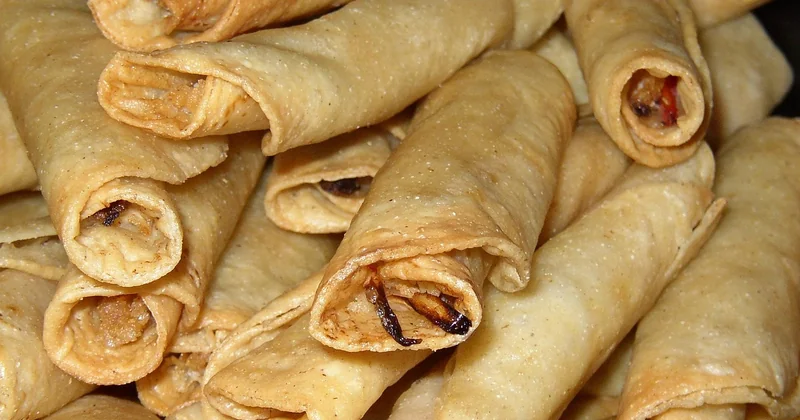
- Chilaquiles — from Nahuatl, roughly "chiles and greens" or "in a chile broth." Fried tortilla pieces simmered in salsa.
- Migas — "crumbs." Torn or fried tortilla pieces folded into scrambled eggs.
- Machaca — dried, shredded beef, originally a preservation technique from northern cattle country. Rehydrated and cooked with eggs or in a stew.
- Molletes — from mollete, a soft roll. A split roll topped with beans and melted cheese.
- Enfrijoladas — "in beans." Tortillas dipped in a bean purée rather than a chile sauce.
- Entomatadas — same idea, but the tortillas are coated in tomato sauce.
- Huevos a la mexicana — scrambled eggs with diced tomato, onion, and chile. No sauce poured on top. Just mixed in.
Notice what's missing: nothing here is described by what it tastes like. Everything is described by technique. That's a useful mental shift. When you see a dish name you've never heard of, ask what the verb or noun inside it means. You'll usually be able to guess the plate.
Regional mapping: why similar-looking dishes aren't interchangeable
Two plates of eggs and tortillas can come from opposite ends of the country and share maybe 60% of their DNA. The differences are what make them regional, and they're the thing most recipe roundups flatten into a generic "Mexican breakfast."
| Dish | Traditional region | What marks it out |
|---|---|---|
| Migas norteñas | Northern states | Torn tortilla chips, often with diced chile and, in some versions, a touch of tomato and onion. Drier than central versions. |
| Machaca con huevo | Sonora, Chihuahua, Nuevo León | Shredded dried beef. Egg is a vehicle, not the star. |
| Chilaquiles | Central Mexico, Mexico City | Salsa-soaked fried tortillas. The version served in the capital tends to be saucier, with a heavier garnish of crema and cheese. |
| Huevos motuleños | Yucatán | Fried eggs on a tortilla with black beans, ham or peas, and a tomato-chile sauce. Layered, not mixed. |
| Huevos rancheros | Widespread, but rooted in rural ranch cooking | Fried eggs on a lightly fried tortilla, salsa poured over. Simple, no beans folded in. |
| Enfrijoladas | Central and southern states | Bean sauce instead of chile. Often topped with queso fresco and raw onion. |
The through-line is technique, not ingredients. Everyone has eggs, tortillas, beans, and some form of chile. What changes is how the components are combined—sauce on top, mixed in, layered, or absorbed.
What changes a dish most: the sauce, not the filling
Swap the salsa and you have a different dish, even with identical eggs beneath it. Salsa verde gives you a tangy, tomatillo-forward profile; salsa roja goes deeper and slightly smoky; a chile de árbol sauce brings heat that sits on the tongue. A molcajete-ground sauce will be coarser and more textured than a blender version, and you can taste the difference immediately.
If you're cooking at home and can only get one thing right, get the sauce right.
Is there such a thing as a sweet Mexican breakfast?
Yes, but it's not the headline act. Mexican mornings can absolutely be sweet—it's just that the sweet items play a supporting role rather than replacing the savory main.

- Pan dulce with coffee or hot chocolate. The everyday sweet option, sold in every neighborhood bakery.
- Conchas, orejas, mantecadas — all variations on sweet bread, eaten alongside or before the savory plate, not instead of it.
- Atole and champurrado — warm, thick drinks made from corn masa, sometimes with chocolate. Common in colder regions and during holidays.
- Arroz con leche and plátanos fritos — dessert-adjacent, occasionally served at breakfast in some households.
The pattern: sweet things exist, but they accompany. A plate of conchas alone is not a traditional Mexican breakfast. A plate of conchas with huevos a la mexicana and a cup of café de olla is.
Simple Mexican breakfast ideas for a normal weekday
You don't need four components to eat well in the morning. The everyday versions are often three-ingredient plates.
The everyday shortlist
- Scrambled eggs with diced tomato, onion, and jalapeño. Warm corn tortillas. Done.
- Refried beans spread on a toasted roll, topped with melted cheese. That's a mollete.
- Tortilla chips simmered for two minutes in a jarred salsa verde, topped with a fried egg.
- Scrambled eggs with torn tortilla pieces and a spoonful of salsa.
- Fried eggs on a lightly fried tortilla with salsa poured over.
Notice there's no casserole in that list. If you're looking for a "Mexican breakfast casserole," you're looking at an American adaptation—usually a layered bake with eggs, tortillas, cheese, and salsa, meant to feed a crowd. It works, it's convenient, and it borrows genuinely Mexican components. But a home cook in Oaxaca isn't assembling one on a Sunday. It's a hybrid that happens to be delicious, and it deserves to be labeled as such.
The rule that separates the real thing from the imitation
Corn tortillas, warmed, on the table. Not a side note, not optional, not flour. That's the single strongest signal that you're eating an actual traditional Mexican breakfast rather than a Mexican-inspired breakfast. If the tortilla is missing, something got lost in translation.
Why this matters beyond just getting the recipes right
Most of what you'll find online treats "Mexican breakfast" as a category of recipe, like "Italian dinner" or "Thai takeout." It isn't. It's a time slot inside a daily rhythm that has its own logic—lighter morning, substantial late morning, heavy afternoon, light evening—and the recipes only make sense inside that rhythm.
Get that part, and you stop asking whether chilaquiles are "breakfast food" and start asking what time it is. Which, honestly, is the more useful question.
If you cook one thing from this article, make it huevos a la mexicana with warm corn tortillas. It takes eight minutes, requires no sauce-making, and it's the version most people actually eat at home. The rest is layering.