There is a specific kind of dread that hits on Tuesday at 12:40 PM. You open the fridge at work, see a sad plastic container of something you made on Sunday, and realize you would rather eat a granola bar at your desk than look at one more spoonful of quinoa. I know that feeling intimately. For two years, I was the person who prepped five identical containers of chicken and broccoli, ate three of them, and quietly threw the other two away on Thursday night. I was wasting about $14 a week in food I never touched, and I didn't even like what I was eating.
The turning point came when I stopped treating meal prep like a production line and started treating it like a small kitchen system with rules. Over the past three years, I've cut my per-lunch cost to roughly $3.10, my prep time down to 75 minutes on Sunday, and I've stopped the Thursday garbage disposal ritual entirely. Here's how to meal prep healthy lunches for the week without hating yourself by Wednesday.
Key Takeaways
- Component prep beats full assembly. Cook ingredients, not finished dishes—you assemble the day of, so nothing gets soggy or boring.
- Aim for 30–40 g of protein per lunch. That's the threshold where most people stop raiding the office snack drawer at 3 PM.
- Sunday is overrated. A 75-minute session plus one 15-minute Tuesday refill works better than a marathon.
- Four days is the honest shelf life for cooked proteins and grains in a standard fridge.
- Freeze the Friday portion. It's the single habit that stopped me from throwing food away.
Why most meal prep fails by Wednesday
Look, the problem isn't your discipline. It's the format. When you cook five complete identical meals, you're betting that your Tuesday self wants the same thing your Sunday self wanted. That's a terrible bet.
I made this mistake for ages. Five containers, sealed, labeled, identical. By Wednesday, the texture of reheated rice had gone slightly chalky, the chicken had that faint reheated funk, and I'd started bargaining with myself: maybe I'll just grab a sandwich today. One sandwich became two. Two became the whole rest of the week.
The fix is to separate cooking from assembling. You cook a handful of flexible components on Sunday. You assemble each lunch in five minutes the morning of, or the night before if you're organized. This way Tuesday's lunch can be a grain bowl and Thursday's can be a wrap with the same underlying ingredients, and you never eat the same plate twice.
The 4-day shelf life rule
Cooked chicken, beans, and grains are generally safe for three to four days in a fridge kept at or below 40°F (4°C). That's not a guess—it's the standard food safety guidance you'll find on any government food safety page, and it's why Friday lunches are the ones people throw out.
My solution: I pack Monday through Thursday, and I freeze Thursday's portion on Sunday night. It thaws in the fridge by Wednesday evening. Sounds fussy. Takes ten seconds.
The Sunday prep session, hour by hour
Here's what 75 minutes actually looks like. I'm not going to pretend it's a leisurely afternoon of chopping vegetables with a glass of wine. It's efficient and slightly chaotic, and my counter looks like a crime scene afterward.

Minutes 0–15: start the oven and boil
Oven to 425°F (220°C). Two sheet pans in. One gets chicken thighs (cheaper than breasts, and they reheat without drying out—this was a revelation for me). The other gets whatever vegetables were on sale: peppers, broccoli, sweet potato cubes, red onion.
While the oven does its thing, a pot of grains goes on. I alternate weekly between brown rice, farro, and quinoa. Simultaneously, six eggs go into a second pot to hard-boil.
Minutes 15–45: chop and mix
This is the part people hate, so here's my honest shortcut: I buy pre-washed greens and a bag of shredded cabbage. Yes, it costs about $1.50 more. No, I do not care, because it saves me 20 minutes and I've done the math on what my time is worth.
Into containers go: greens, cabbage, cherry tomatoes, cucumber. A jar of dressing gets shaken up—usually olive oil, lemon, Dijon, salt. That's one jar for the whole week.
Minutes 45–75: cool, pack, freeze
Everything comes out. The critical step that took me way too long to learn: let cooked food cool uncovered for 20 minutes before sealing it. Sealing warm food traps steam, which turns into a puddle, which turns your greens into slime by Tuesday. I lost a lot of good lunches before I figured that out.
Then: proteins in one large container, grains in another, roasted veg in a third. Components, not meals.
What goes in a lunch that actually keeps you full
Protein is the lever that matters. If your lunch has 15 g of protein, you'll be hungry at 3 PM regardless of how many calories you ate. Push it toward 30–40 g and the afternoon grazing stops.
Here's roughly how I hit that number without weighing anything:
| Component | Typical portion | Protein |
|---|---|---|
| Chicken thighs (roasted) | 150 g | ~32 g |
| Canned tuna or salmon | 1 tin | ~25 g |
| Hard-boiled eggs | 2 eggs | ~12 g |
| Chickpeas | 1 cup | ~14 g |
| Greek yogurt | 200 g | ~20 g |
| Firm tofu (pan-fried) | 150 g | ~16 g |
The easiest fix if you're consistently under: add two hard-boiled eggs to whatever you already packed. That's 12 g for maybe 40 cents.
Should you count calories?
For most people, no—not precisely. Portion your protein, fill half the container with vegetables, add a fist-sized serving of grains, and you're in the right zone. Precision tracking adds friction, and friction is what kills a prep habit by week three.
Prep ideas that don't taste like leftovers
Variety comes from sauces, not from cooking five different meals. This is the single biggest unlock I found.
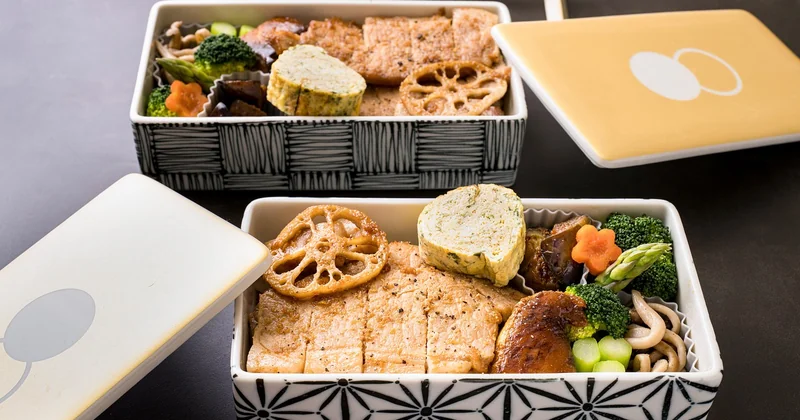
- Base: grains + greens + roasted veg (same every day)
- Protein: rotates—chicken Monday, eggs Tuesday, tuna Wednesday, chickpeas Thursday
- Sauce: this is where it changes. Tahini-lemon, pesto, chili-crisp yogurt, a simple vinaigrette
Same ingredients, wildly different lunches. A tahini dressing over chicken and farro tastes nothing like chili-crisp yogurt over the same farro.
High-protein lunch ideas for weight loss
If fat loss is the goal, the structure is: protein first, vegetables second, starch third. Practically that means a container that's 40% protein, 40% vegetables, 20% grains. It's genuinely filling at around 450–550 calories, and you won't spend the afternoon thinking about food.
A real example from my own rotation: 150 g roasted chicken, a big handful of cabbage slaw, roasted peppers, half a cup of farro, and two tablespoons of yogurt-tahini sauce. That lands around 520 calories and about 38 g of protein. I've eaten a version of this most weeks for two years and I still don't dread it, mostly because the sauce changes.
Budget and containers: the unglamorous part
Nobody wants to read about Tupperware, but it's the difference between a system that works and one that collapses.
Glass containers with locking lids. That's the answer. Plastic ones hold onto smells, stain with tomato sauce, and warp. I bought a set of five glass containers for about $28 three years ago and they're still going. Dividers help if you're assembling in advance; if you assemble fresh each morning, plain containers are fine.
Per-lunch cost, based on what I actually spend at the grocery store: roughly $3.10. Compare that to a $12–14 takeout lunch five days a week and the difference is about $200 a month. That's not a rounding error.
What freezes well and what doesn't
Cooked chicken, chili, soups, and grains freeze beautifully. Cucumbers, leafy greens, and anything dairy-based do not—they turn to mush or separate. Freeze the protein and grain portions you won't reach until Thursday or Friday, keep the fresh stuff for the first three days.
The Tuesday refill
Here's the part nobody mentions. A Sunday prep session alone won't carry you to Friday with fresh food, because greens wilt and textures change. So I do a 15-minute Tuesday evening refill: chop fresh cucumber, restock greens, make another jar of dressing. That's it. No cooking.
It sounds like extra work. It isn't—it's the thing that keeps Thursday's lunch from being a sad, slimy reminder of Sunday's ambition.
Where to start this week
Don't build the whole system at once. Pick one protein, one grain, one vegetable, and one sauce. Cook enough for four lunches. Assemble them the night before, not five days ahead. See how you feel by Thursday.
If you get through the week without throwing anything away, you've won. Add a second protein the following week. Add a sauce variation the one after that. The system builds itself once the first week proves you can actually eat what you cook.
And if you're standing in front of the fridge at 12:40 PM on a Tuesday, staring at a container you already know you won't touch, that's not a willpower problem. It's a design problem. Change the design.